
And The Conversation Continues!
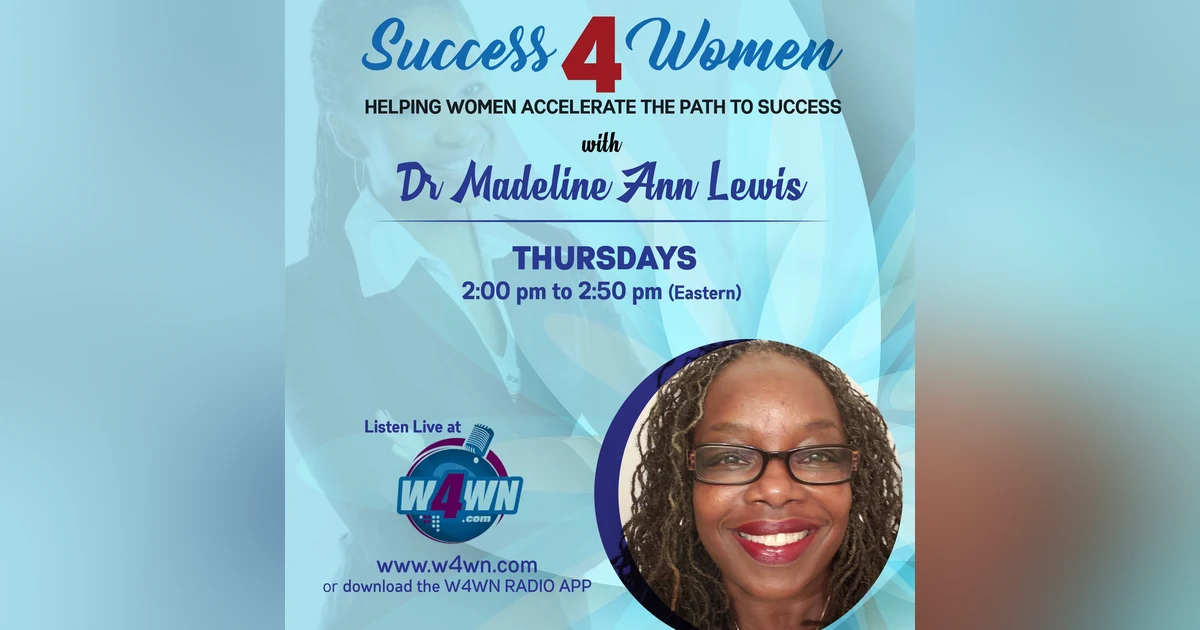

Join Dr. Madeline Ann Lewis in a conversation with Marissa Bloedoorn, CEO & Publisher of OWN IT Magazine & CEO of TCS Consulting, and Jacqueline (Lulu) Brown, CEO of Revolution Ascension.
Success 4 Women is broadcast live Thursdays at 2PM ET...
 iHeartRadio iHeartRadio
 Spotify Spotify
 Amazon Music Amazon Music
 Audible Audible
 Pandora Pandora
 Apple Podcasts Apple Podcasts
 Podchaser Podchaser
 Audacy Audacy
 Deezer Deezer
 Spreaker Spreaker
 Youtube Music Youtube Music
 Podcast Addict Podcast Addict
 Castbox Castbox
 JioSaavn JioSaavn
 Castamatic Castamatic
 Castro Castro
 Fountain Fountain
 Goodpods Goodpods
 Overcast Overcast
 PlayerFM PlayerFM
 PocketCasts PocketCasts
 Podimo Podimo
 Podurama Podurama
 Podverse Podverse
 Podyssey Podyssey
 TuneIn TuneIn
 YouTube YouTube
 RSS Feed RSS Feed iHeartRadio iHeartRadio Spotify Spotify Amazon Music Amazon Music Audible Audible Pandora Pandora Apple Podcasts Apple Podcasts Podchaser Podchaser Audacy Audacy Deezer Deezer Spreaker Spreaker Youtube Music Youtube Music Podcast Addict Podcast Addict Castbox Castbox JioSaavn JioSaavn Castamatic Castamatic Castro Castro Fountain Fountain Goodpods Goodpods Overcast Overcast PlayerFM PlayerFM PocketCasts PocketCasts Podimo Podimo Podurama Podurama Podverse Podverse Podyssey Podyssey TuneIn TuneIn YouTube YouTube RSS Feed RSS Feed
Join Dr. Madeline Ann Lewis in a conversation with Marissa Bloedoorn, CEO & Publisher of OWN IT Magazine & CEO of TCS Consulting, and Jacqueline (Lulu) Brown, CEO of Revolution Ascension.
Success 4 Women is broadcast live Thursdays at 2PM ET on W4WN Radio - Women 4 Women Network (www.w4wn.com) part of Talk 4 Radio (www.talk4radio.com) on the Talk 4 Media Network (www.talk4media.com). Success 4 Women TV Show is viewed on Talk 4 TV (www.talk4tv.com).
Success 4 Women Podcast is also available on Talk 4 Media (www.talk4media.com), Talk 4 Podcasting (www.talk4podcasting.com), iHeartRadio, Amazon Music, Pandora, Spotify, Audible, and over 100 other podcast outlets.
Become a supporter of this podcast: https://www.spreaker.com/podcast/success-4-women--3126970/support.
0:00 The topics and opinions expressed on the following show are solely those of the hosts and their guests, and not those of W four WN Radio It's employees or affiliates. We make no recommendations or endorsements for radio show programs, services, or products mentioned on air or on our web. No liability, explicit or implied shall be extended to W four WN Radio It's employees or affiliates. Any questions or comment should be directed to those show hosts. Thank you for choosing W four WN Radio. I got the man. Did you know women represent just three percent of Fortune five hundred CEO in less than fifteen percent of corporate executives at top companies worldwide? Have you wondered what the secrets are to getting into the top ranks, whether in the private or public sector. Do you want to figure out how to stop being held back in your career? Are pasted over for promotion? Then you're in the right place. Hi. I'm doctor Madlananne lewis President and CEO of the Executive Women's Success Institute. I have decades of experience in the military, the federal government,
1:33 and corporate America, and my mission is to help women succeed and tap into their full potential. I want to reach a million plus women around the world to become the leaders they are meant to be. So if you want to move into a management or executive level position, or maybe you are a female veteran transitioning out of the military into business entrepreneurship, then reach out to the Executive Women's Success Institute at three zero one six nine three three two eight four. Let us get you on the fast track to success.
2:21 Well, Hello, and welcome to the Success for Women's Show, where you can view us on Talk for TV and listen to us on the Women for Women Network. I am doctor Madeline Ann Lewis your host, and my mission is to help women accelerate the path to success. Well, today's topic something that we have been hearing a lot about in the in the news, and a lot of companies organizations are talking about it. So we're saying and the DEI conversation continues, and my guests today is going to be Marissa Blowdorn. Let me just tell you just a little bit about her because I want to get her on here so we can have this conversation. Marissa Blowdorn is the editor in chief of the own IT magazine, phenomenal professional development, career develop all kind of stuff you can find in this beautiful magazine. And she is also the CEO of TCS Consulting, LLC. She has established a reputation as a dynamic training and organizational development professional. So today she's going to come on and we're going to have a conversation about DEI just to see what's going on with it and what she thinks about it, her opinions on it, and so I would just like to
3:53 welcome to the show. Ms. Marissa Blowdorn. Hey, how are you? Oh? And I forgot to mention she's coming to us from the Dominican Republic, So welcome, welcome, welcome. I I was so excited to be here. Thank you so much for the opportunity to share your platform. You appreciate it. Well, it is great to have you here today. And I know we have a lot to talk about and you've got lots of stuff going on, so we're going to get into that too. But before I gets started, I always give like a standard bio, a little bit of brief something on my guests, but I always like to ask the question for them to just tell us what you want us to know about Marissa Bluldoon, Well, you know what.
4:44 I want folks to know is that. To some this may sound like Corey, others may get it is that out of care, I care about the people I serve, and many times I them to achieve what God has put them on this earth more than they do. And so God has shown we had to relax and don't worry about that, but make sure they show up to introduce to them the possibility that what they may be thinking is impossible is possible for them, that it is within their reach, that's within their their career, their business. My foundational understanding and approach is self awareness should.
5:28 Lead you to self development. When you really become cognizant of who you are and what you would put here to do on the earth and get in alignment with your life's assignment, you'll want to develop. So self development is the next component to what's so important too, living a fulfilling life. And once you. Start self developing, you start to enter into a place of self maxery, which that's a a higher archy of needs focuses on self actualization, and that's exactly what it is. Self maturing not about being perfect, but knowing yourself well enough to know how to navity around this world successfully to ensure that you are living a fulfilling and happy life and that will fill over into everything else you're connected to.
6:12 So that is my. Modest bless me with a very unusual and indirect way of doing that, magazine and book publishing and offering people the opportunity to speak abroad. Well, I tell you what I can attest to the fact that what you do, you do it in excellence. So I love that I have worked with you on many occasions, been in the magazine, you publish my book, so I absolutely know what you're what the level of excellence you bring to the table, and not only that, your integrity too, And those are definitely important characteristics to me, which is why you and I think have been dealing with each other. So it's like I know people you know, people don't know. But I'm like at night, I'm like sending you a little messages tails whenever asking you a question, I'm like, Okay, you can get back to me when you want. But it's just good to know that there's always someone that you know you can reach out to if you got a question. And the thing about you is that you don't mind sharing your expertise no matter what it is, and so that is so much appreciated, and I just wanted to make sure that I let you know that I appreciate that. So thank you. Yeah, So now we're going to talk about this topic of
7:44 d e I because I know we had a conversation about it once before, and it's just it just seems to still be there in the foreground of everything that's going on. So tell me and just and you can throw some things out here too, But what do you think is about dyah? What do you tell me what your personal opinion is about? Okay, So a little bit of my background so that everyone knows what perspective of speaking from is industrial organizational psychology. So I'm looking at organizational performance overall. My training and development is to look at organization, measure their their performance, and give them feedback on how well they're doing based.
8:33 On that assessment. So I have my master systs, dis certification, and behavioral analysis. So I'm looking at it. From the pos perspective, the perceived organizational support. So I'm looking at it from the employee or the workforce and measurability. In their performance. One. Two is a factor that I wanted to mention is that not one not all the employees are very aware of an organization's d I d I programs and how it is protecting them. So it has been the silent shield that has protected employees with them not even knowing that they've had this level of protection. And now that's going to be taken away.
9:18 But I don't. Say this and all of my even though I'm here in the Dominican Republic, just saying in tune and aware of what's going on in the States, I have to because my work is within the uned States. He's though I'm here, all my work is still with us people. Is that some organizations realize the value of it, so we can we can say, hey, I'm not sure of those organizations by this right at this very moment, but there are some organizations that are fighting back to keep intact their DEI programs. So let's make sure that we talk about it. We talk about in fairness. I believe in fairness. And so they realized the c POS is perceived organizational support. So ultimately every organization wants to perform well because we know without them saying it performance impacts revenue income the money that the company is going to make.
10:25 Poor performance or revenue it hits the revenue and hits the money. So DI offers employees the ability to relax know that their organizations that they work for care about. Them, are concerned about them. That's the perceived organizational support. When an employee that they show up well for the organization, there is no internal conflict. They care about the organization, so they want to make sure they do right by the organization. There is to come to the organization's visions. Goals CSR, So those are very important.
11:07 And so I'm coming from that perspective. To say the organization's, hey, be very careful because you already have all of these. Boycotts going on. That's going on, you know, because people are scared. You don't want them to focused on you know, you don't want them in anxiety. You want them in comfort. You want them to be in positive pos not negative epos, because ultimately it's going to have an impact. On your repord. So you don't care about people you met. Car a pats of revenue right absolutely, because I mean I've had just in the time frame that all of this aren't taking place. I've had several people calling me and just wanting to talk about some things that's going off with them. I mean, even those that are in their careers. I was just talking to a young lady this week and she literally lost her job and so she was trying to figure out basically what she should do.
12:15 What can she do, you know, some things that how she might be able to pivot through all of this or get through all of this, and it's it's really hard. I mean I have been making sure, like you, to stay on top of what's going on because of what I do the professional career development professional development. I'm also making sure to stay on top of when they have events like for job fairs and different things like that, which as a matter of fact, we had one today that I was able to send to her and let her know about and she, you know, she was just so pleased with that. But the thing of it is that people, like you said, people are afraid, and it's like to go to work and not know at the end of the day if tomorrow when you come you're going to be locked out of a building. I mean, that is what the problem is. And as you said, about organizations needing to be careful. I mean because the risk that there's a like the current backlash we all know is that fear of also of legal trouble, and that could cause some of the organizations to to to to install or abandon which we've seen meaningful di progress which has taken place so far, some of them, like you said, not all, because there are some that has stood by, you know, stood strong and said I'm keeping my program, and because they know. These are the organizations
13:46 that know that this works. Because it's not just for a small few, it's actually for everybody. If you think about how it works, you know, really look at how it works. It's for everybody. It is not just for a small few. Now, I will say that, you know, when it as it has been established, there has been a group that has benefited largely from it, as we know that. But it was not just that it was established. If people would just sit down and think about it, it was established so across the board everybody could be treated fairly. Everybody could be included when it comes to hiring practices, different things like that, promotions. It's for these types of things, so across the board, everyone could be treated you know fairly. And then you have your younger generation of workers in particular that's coming in and talk about they're being vocal about the their desire to work for organizations that reflect that type of value. Because let me tell you something, I know, the younger generation they will quit in a New York second. That yeah, they if they're not pleased with what's going on, they will quit in a New York second. So they really are
15:19 looking for that organization that has that type of values and and and inclusion in their organization. So if you want the up and coming young and you want that experience that they bring, the tech savvy and all of that, then you're gonna have to You're gonna have to stick with some of these, you know, not some, but all the your DEI programs, even you may not like them. And we all know now we can see the ones that I guess felt like they were forced to implement them because they jumped on board with getting rid of them so quickly. I mean, it was just unbelievable, you. Know, because we're on this topic on the state here, but there's an underlining current to why those particular organizations chose to get rid of it.
16:10 Very fact. So, and when you talk about the younger generation, you have to remember that this is a generation that's entered the workforce after watching their parents. Because remember back in the day. I remember when I first time, first corporate job, working. For AT and T, and it was always you know, when you were in a social environment, well where you were and it was like, oh yeah, I work for AT T. You know, that was the eighties and nins. You you wanted the main drive, you know, Kirsty, You just you wanted a name job. You were proud of your job. You wanted to be proud of your job. So not only were you wanted to be proud of your job, you looked at performance review. You wanted to make sure that you weren't check you know, you know, oh did I get an FP which is far exceeded, and you know all the other good things. But the young people watch their parents in the nineties, in their early two thousands lose their jobs, you know, because of the style marketing, because of all of these dot coms.
17:12 We don't talk about the dot com industry where they were frauds and they went crashing. And these young people watched their parents work so hard and lose their jobs, so their perceived pos is negative, right, So they don't have commitment. Like their parents did. That's the difference, because they watched organizations. Just let the parents go and see what organizations. This should be a learning lesson for them if they're paying attention. What this should be for them is a lesson to say. You may say something is right, and you may think that its impact is limited, but others are watching, watching, and they're making a decision as to whether or not they want to want to continue in this pattern. And that's how you see even younger people talk about they don't want DI because they don't even understand the ramifications that if DEI wasn't in place where their parents would be right now and where they could be.
18:18 Right now, they may not have these jobs. So there is a disconect of the reality for some young people of just the higher value and impact DEI. Tac so o charge to this is those who have been in DI, those who have fostered in trail wades now awaiting that you can't keep it that's kept secret, that DEI its impact and its important and it's relevant to be a part of the training and development programs right they have to make sure. You have to make sure that the massive population really understand what d I.
19:02 Now it shouldn't be, but now is the time to go out and really drive home who DEI is, what what it has done. Give Prince calls the numbers, give them, be transparent, and give those numbers so that our young people can be educated. It's generally. Know the importance of and pressing their organizations to actually adhere to it because DEI does enforce accountability and enforces accountability absolutely. And you know, as you were saying about your first corporate job was AT and T, well guess what mine?
19:44 Mine was South Central Bell in New Orleans. Because at the time, uh, it was South Central bel. We didn't have all these other AT and T's baby bells, and you know, we didn't have all of that back then. It was. It wasn't until they actually split the company that we started getting all these different named companies. But that was mine too, South Central Vale in New Orleans. And I remember when I got laid off from them in like you say, in the eighties, I got laid off sometime in the eighties and that my first thought was, oh, well, they don't care that much about me because I had been there for eight years, and I'm like, if they don't care that much about me that I'm going to get me a government job. Yeah, And that is what made me look at getting a government job, because I said, government don't let you go. They keep looking, they keep you forever, you know. But as you were saying with our parents, you know, and with the younger generation seeing them, our parents, when they got a job, they got a job to retire in that position. They weren't looking to hot from here to here to hear to hear, which is what our younger generations. They don't have a problem doing that. And that's why I say, you know, if they're not pleased with something that's going on, they will quit.
21:05 I recall one time when a young man who was working in the organization that I was working in, and he hadn't been there that long, I don't know, maybe a year, year and a half, but he decided he should get a raise, and he, you know, wasn't. They didn't feel he was ready to get one. Yet the next day we came, he had left all his credentials on the desk. He didn't come back anything, just didn't come back So that's why I say in a New York second, they will quit if they are not pleased, you know, with what's going on, and it's it's unfortunate because I've also heard, you know, there there has been where people some people may think that some of the backlash against DEEI came because around twenty twenty when they will face with the George Floyd being killed and all of this kind of stuff. But little do people know some anyway, that was not the case. That original DEI programs date back to the civil rights movement, was not something that is new. It is not something that started last month. Okay, you know, it was something that played a pivotal part in creating, you know, trying to create a more diverse and inclusive workplace for people. Right that needs to be understood about d and that's the errents.
22:35 So then we are in the errings of just not knowing. What it is. And also too and in going back to folks who losing their jobs, your rights. You don't know your rights. The reason why you know, leaders and other words issues can get away with the things that they're doing is because most people don't know their rights. You don't know your rights, and you have to fight the law right and so it's not about emotions, it's not what is the letter of the laws said and the lass that you cannot get rid of me? Then this is age too, So yeah, it doesn't matter that they're dismantling.
23:19 It's what the. Max is exactly going to be. Remember, you know we have the lit magazine for the very reason. Knowledge is power, but knowledge. Of try is powerful. So you have to go and find out what your rights are. If you were if you were fined, then you have to look at what what were your rights? Look at your handbook. Most people get their handbook their employee handbooked and never look at it. It's the man goal where your property the man. I say that you have to know how the organization functions, but I also say one of the things I always tell uh the end of Visuals that I work with, is that you need to know someone in each one of those different departments and EEO needs to be one of them. It needs to be one of them. You need to understand the rules and the regulations, You need to understand how your organization works and different things like that, because if you don't, then like you said, these things.
24:20 You know, if someone tells you you haven't tell Friday to resign or something like that, or send an email saying you resigning, give me a break. Your federal government doesn't work like that. I mean, for one thing, it takes you for having to get somebody out of the federal government to be the truth, you don't and that's because you have to have a pay per trayal to justify why you're getting rid of them. Yeah, documentation, and so you need to understand that. I think that another thing that we not done is. And why most people don't look at their handbooks, it's because.
25:02 You're just looking at the paycheck. You're just like, look, is this how much I'm going to make? And this looked good. There's a term that I always use it, and I say, but I don't say it lightly. And I think that sometimes. When you can come up with these beautiful word phrases and things like that, people are mesmerized. With, Oh my god, that's so powerful. Yeah it's not. Powerful, but it is powerful if you've got you got an awaiting too. What is really being said to you when I say you are the CEO of your life and it is time. To make executive decisions. It's not being cute, it's about being conscious. You've got to be conscious and you have to protect out for the long haul. You can't just make quick decisions. You've got to be able to look at this decision and say, how in the long run is this going to impact But we're not taught that. We're taught go get a job, you know, just start getting home, you know, you know, go get a job. Just go get a job. You gotta work, you gotta well what kind of and so some.
26:12 A lot of that is done at home. You know, these conversations and Nathaniel Ross and I you know, had these conversations for years. So what's around the dinner table? Stop talking about the designer shoes and designer building and perfew and where you're going and you know who and what started and what. No, it's time for us to have those conversations that are going to impact our legacy, right, that are going to impact us in time to like these right in times that are these that we have our financial house in order, you know, and things like that. So I want to go back to talking about that and compensation, compensation, and you talked about ee oh you know you want to make sure that you know your affirmative actions.
26:58 You're going to know that department. You want to know your HR department. Who's who's who in. The HR department? Now, that's so important. And we have to train people. So if you call yourself a mentor, if you call yourself a coach, and you're teaching your. People the power of the pivot, making sure. The one thing that I'm so faithful of and the reason I can sit where I am today is is because of my skills, my massive skill level. Right, so not only can operate as a CEO who projects way out, also operate as the adage, the secretary, the Assistant's critical because it gives me fluidity. Right, you get in all the different levels you know, unswayed, there's no swaying. I can go up and make the big decisions, and then I can go down and make some.
27:57 Low detailed level decisions. People, you need to make sure that you have that flexibility with your skill set and your competencies. Right, You've got to be confident in areas even if you don't like them, Even if you don't like them, you don't want them, because even to bring staff on, even to lead people. You have to be able to show them how they need to show up for you. You need to know those skills. You're not everyone's going to come to you readily equipped. And so this is why DEI were in too, because it affirms the fact that we need these kinds of people. We need diversity, We need people from all different bats, all different cultures too, so that we have all these different perspectives and we can come up with.
28:47 One beautiful or multiple beautiful things because so much has been added to it. And so exactly, I mean, because think about it. When you remove those types of programs and and and and the different policies associated with them, and again you're that is with the diversity of your leadership, I mean leadership positions. Now, what are you gonna have? You're gonna have everybody And I had to say this, but they had a but they had a photo on I think it was faced with one of the social media sites and they were saying this was they had captured a meeting at the White House. What and it was supposed to be a women's like women's meeting type thing. All men sitting at the table, not one female was at that table. Wow, you make any type of decisions that's going to be that you know, that's going to have a broad range, you know, that of affecting people if you have don't have a broad range of individuals sitting at that table.
30:00 Every last one fitting at that people was for women and. Men have have a clue was ripping. One for me? They don't. I'm sorry, It's just like I do. You know. It's one of those things where the only thing I just put my little shaking my head emoji on there. I'm thinking, Okay, let me know how that works out for you. You know well that but it's telling him that men and I wasn't about to say this, but the real push for this was the me too movement. Yes, because as the high level of wish the consistency and behavior and character among men, But she has unwrapping right, and that was just too much. So that's what this DEI is.
30:54 It's about me too. You are not going to be able to do this to us again. Remember when there is accountability, there is costs associated with accountability. And when that confence that great, they're saying. No, it's not going to be any more of this me too stuff going on. We're going to fight, and that's what your men are doing. Your men are. Saying, we're not going to do this. We're not going to allow this to continue to happen to us. And that's how we begin to dismange it. But we don't have to do that. We don't have to allow that. We have to educate people on the origin of DEI. The result is gotten because it has been a hidden weapon.
31:39 It has been a hidden protector, and not everybody has been. And the reason why I brought up compensation is because I'll share this with you. When I was working for AT and T, I got far exceeded. You already you mentioned it at the time. I don't have to blow my own horn. I'm new to work for myself because I know how hard I worked for other companies right now, organizations, and. I said to myself, I can work like this for me m M, and like this were a company. I didn't I believe that I can't. Well, I'm going to tell you I thought as a young person, because when I started working for ATT, I was only nineteen years old. I wasn't old enough. I need to go to college where they would tell you.
32:23 So I didn't pay attention to the compensation right the awards, because with AT and T you got a performance award and you got American and the performance award was based on your. Level in the company. Your magive world were showing up. And so I'm thinking, get it. It is amount of money. Oh, this is raised Christmas time. This is great. Only to find out once I left the R and D side and went over to the marketing, and in marketing and research did I find out that actually worked harder.
33:06 It was only a fifty percent of and. My performance the whole time I was there, it was far our ceeded. Wow, So making makes. Sense, as my sister Judie would say, make it sense. So I was aware that I was should be discriminated against because I thought all of their turning words, all of their but when it really matter and setting the department's budget, my department had felt, we don't need to give Marisa what matches her actual evaluation. We give her hand and should be happy. And she's never complained. And I never complained because I did not know I had a right to. I did not even know there was anything to complain about. And so with D I this is what we have to do.
33:58 We have to make sure. Were doing the people can't go to a job any more and just not know. That is absolutely true. And keep in mind another thing too. You know, remember when back when, and I know you do when, Uh, we as women weren't even in areas such as finance and technology and all of that stuff. Okay, because of DEI, firmative action and all of that. That's the way we're able to get into those areas. That is the only way. I never forget. Another female friend of mine, she was wanted to she was she was already a supervisor, but she wanted to be ahead of one of the departments. Well, they did not want to give her that department because they felt like even though she was good as a supervis they wanted her like over admin stuff. Yeah, they didn't want to put her over like the technology and all of that because they didn't feel like she would be good enough to do that until she took through the task for it. She had she had to go toe to toe with them to let them know. Hey, And that's why I always tell when you're trying to get into a position that they you they feel that you're not good enough, just say to them, hey, let me do it for thirty days.
35:29 Let me show you I can do it for thirty days. If then you feel like I'm not, you know, qualified to do that position, then I won't bother you again. Sometimes you have to, you know, hold their fire to let them see that, hey, you're capable of doing it, because if not, then they'll just say, well, we're gonna put a man over here. Because that's what happened when I do my teed tar. That's one of the examples I used when I went for this promotion. Three guys up against me. Neither one of them have the experience that I had, but they wound up putting one of them in that position who wasn't even in the organization. That's what After a few months he quit. He couldn't handle it. Yeah, I mean I had to step into it anyway, right right, Make look at the time, you wasted the money, you wasted putting him in something that he wasn't even qualified to do, and it didn't really want.
36:25 So sometimes they don't even want it because even when you're may not be one, when you want something, you show up for it, work hard for it, and that makes a difference. And so you know, just like I said, it really really is a matter of making sure that every day what we used to call back the day Joe Schmoe. No, right, we educated people because they're not educated. They're watching tiktoking, they're watching all these other platforms, and they're getting snid bits of stuff and it's overwhelming. It's overwhelming. They follow They end up following folks that may or may not be on point, unfortunately, and.
37:10 They're not getting real information. And they need to get the real information so that real quality decisions and quality movements can be birthed out of this. They need to be educated. On DEI and. Then also too sad to say, I remember and I start getting my degrees until I believe I was in my thirties when I started getting my master's degree in psychology and then onto my master's and I'm almost done with that PhD. Y'all get there in one of these days. Business just took off, and you just you gotta pivot, you know, you gotta pivot it. And so. I remember having a conversation with a woman at Princeton University, and she was on the human subject research side, and she shared with me that she had someone mentor her at the start.
38:06 Of her career working in labs and different things like that. And that's what we have to get back to. We have to get back to the quality mentorship, really get the educates and takes. The time, not this fluffy talk. But really takes the time to train make sure that their mentees understand processing systems, thinking, critical thinking, deductive reasoning based on saying, hey, do your research, do your homework, know your company, know the organization sause back in the day, you know, back in the day, our parents did not just go to organizations. They actually did their homework to say what is this organization, what are they about?
38:49 And they knew they read the local newspaper. They were well informed rather than just rationally saying just focus on the page itself. They did their homework, they talked to each. Other about they had quality conversations that made a difference. And that's where we have to get back to the grassroots of really making sure that our young people understand EI as well as our older people. Some people don't even know what DI really is and there are a. Page I tell you what and like you were saying, and when they're in organizations, they have to look for opportunities too. I mean, like you said, they can't just sit there and you can't expect everything to fall into your lap. You really can't. You have to out those opportunities.
39:43 And I think that was a lot of what I did in every position that I was in, especially after being at South Central bel getting laid off. At that point, it was like when I got to know, I wanted to know everything about I wanted to know what they did, how they did it. I wanted to be in the know. If there was something to know, I wanted to know about it. Okay, And it's one of those things where when you do that, you kind of put yourself out there a little bit, because then people start taking notice of you too. They'll take a little bit more as to Okay, every time I look up, she's here, she's into something, she's you know, she's sitting in this meeting or whatever. But it's because you find out what's going on.
40:30 And that helps too. And that's why I said when you another thing you mentioned about the being when you promoted in these different positions, even if you're not a supervisor, you should have contacts in different areas. You have to have contacts. When I talk to women about, you know, navigating around some of some of the obstacles that they made face and an organization, but you have to you have to build your own professional network within the organization too, because that's that's a powerful tool to have. When you can pick up the phone and call somebody and say, hey, look, I'm working on such and such, can you give me, you know, some information on this or whatever. That's powerful to be able to do that, I'm telling and I know that for a fact, be able to pick up the phone and call somebody to even get them to do something somebody else have been trying to get done and they couldn't get it done. But you can pick up the phone and get it done because you have a contact. You've networked to the point where people know you.
41:38 They you know, they know what you're all about, and they know if they call on you, you're gonna do the same thing for them, because it works both ways. It's not you're just calling on them, but they're calling on you too. And then, like you said, your skills when you talk about getting your degrees and all of that, your skills, you have to stay focused on your skills and your competencies because you know, even if you're that organization let you go, you still know that you have these gifts, these talents, these abilities, these skills, and so you should be able to know and be confident enough to know that you can either take it somewhere else or you can start your own.
42:19 Y's right, and I'm letna tell you with it. And I will always give AT and T back in the day, they're crudos because it was not for my training and development at AT and T. Because I want to tell you when I started business, I had no. Degree, I had no agree and I was able to sit down because of the experience that I have and the confidence because my skill set. So having skills diversify skills give you a great deal of confidence because you rested that right because you know. What you bring to the table. Now you know you. Can get it done. So that is that number one, and then number two.
42:59 Because I was able to sit in front of clients and go over contracts, go over I come up with my pricing. I was able to build inventory. When I first started my business, I was building inventory just my garage turned it into an inventory area because I went weddings crafts and I had old storage area all because I believe powerfully in the spillover effect of doctor uh uh Bu. Little Brown, Jacqueline Brown and I talk about it all the time, this posover effect, Rob.
43:40 And Hughes, we all talk about it HR stuff, and. We got because the skills that we learned on the job are the very skills that God forbid if you had to lost your own, if you had to go out on your own, are the very skills that you're going to need to uprate your Exactly what I. Did was take those skills, those different h protocols and processes, and I'm just poured them all over into model business and start working for myself. You mentioned about supervisors and managers, which are the heartbeat of organizations that get the less support.
44:24 They don't get the support that they. Deserve and need. They don't get the attention that they deserve and need. A lot of times that goes above them when the directorship and then the higher leadership. But it is your managers. And your supervisors that are once holding the organization in time. They're the ones that we have failed to we have failed to train and develop so that they are able to navigate through uh EI, which is emotional intelligence that's lead to diversity, equity and inclusion. Uh, we have not supported and so when they come they don't even know how to train their people or don't even know the power of they when they have a population of people who are knowledgeable. How that increases performance because when your teams are not always talk about high performance teams, because high performance teams drink the kool aid.
45:19 They're all committed, they're all in. And so it just supernaturally increases how they show up and perform because they want to pour all their skills, gifts and talents into making sure that the organization does well well. Guess what when you take training and development, when. You don't want to have you teach your people that you don't care about them through the best diversity, equity and inclusion, you throw all of that high performance stuff on it out the door. They don't want to give you their skill sets, they don't want to live. You got that right? Well, look, I know we have been having a great conversation. Time always flies when you have a fun and this is one of those conversations where I might have to do a part two of the cop and News because it's just so much to talk about when you're talking about this particular topic. But Marissa, would you quickly let the audience know how they can reach out to you if they'd like to find out more about your magazine, find out more about your consulting services, and just maybe just reach out to talk to you about de Ei tell Us can find you.
46:25 Listen. I'm on social media, I'm on Facebook, I'm on LinkedIn. Just you have my name. I don't know if you have my name up here or not, Mariica Blue n A R S s A that's in his B l O E d O O R and google me you find me, message me on any one of those platforms and let's connect. We got to own the magazine and publishing. We published magazines as well as we publish books. We also offer author speakers the opportunity to be international if. They're not in the ow it X and I look forward to hear from me. All right, thank you so much, appreciate you, Marissa. It has been a treat and a pleasure. I am going to quickly try to let them know what's coming up next, and I will, like I said, thank you so much for being on the platform.
47:19 This is such a pleasure. Thank you for alrighty. I just want to let everybody know to make sure to tune in to the Black Business Olympics April twenty eight through May fourth. I will be the keynote speaker on Thursday, May first at seven pm Eastern Standard time. Also, I'm thrilled to announce that I'll be a guest on the nationally syndicated radio program airing on WHOV eighty eight point one FM, the Essence of Hampton University, So make sure to tune in and listen to my interview. It's going to be that Sunday again April twenty seventh at two pm Eastern Standard time.
48:01 So that's all I can give you today for my upcoming events, but those are two that's going to be coming up soon. So I just want to say you've been listening to the Successful Women's Show. I am doctor Madeline and Lewis. My guest today was Mss Marissa blowed On and if you'd like to reach out to her, just make sure you can check her out on all the social media shop sites the dm her and for me, you can email me at info at EXWSI dot com. I want to thank you again for tuning in, make sure you subscribe to the channel. Like this episode and share it with others. It's been a pleasure being with you today again. This is a successful women's show. We're here every week. I'm your host, doctor Madeline Anne Lewis helping women to accelerate the path to success. Thank you again for joining me. I love you all to life and as always, be well and stay safe out there.
49:03 Got the up the time. That do them. And then And


