
The AI Evolution

 iHeartRadio iHeartRadio
 Spotify Spotify
 Amazon Music Amazon Music
 Audible Audible
 Pandora Pandora
 Apple Podcasts Apple Podcasts
 Podchaser Podchaser
 Audacy Audacy
 Deezer Deezer
 Spreaker Spreaker
 Youtube Music Youtube Music
 Podcast Addict Podcast Addict
 Castbox Castbox
 JioSaavn JioSaavn
 Castamatic Castamatic
 Castro Castro
 Fountain Fountain
 Goodpods Goodpods
 Overcast Overcast
 PlayerFM PlayerFM
 PocketCasts PocketCasts
 Podimo Podimo
 Podurama Podurama
 Podverse Podverse
 Podyssey Podyssey
 TuneIn TuneIn
 YouTube YouTube
 RSS Feed RSS Feed iHeartRadio iHeartRadio Spotify Spotify Amazon Music Amazon Music Audible Audible Pandora Pandora Apple Podcasts Apple Podcasts Podchaser Podchaser Audacy Audacy Deezer Deezer Spreaker Spreaker Youtube Music Youtube Music Podcast Addict Podcast Addict Castbox Castbox JioSaavn JioSaavn Castamatic Castamatic Castro Castro Fountain Fountain Goodpods Goodpods Overcast Overcast PlayerFM PlayerFM PocketCasts PocketCasts Podimo Podimo Podurama Podurama Podverse Podverse Podyssey Podyssey TuneIn TuneIn YouTube YouTube RSS Feed RSS Feed
Join Dr. Lewis in a conversation with Jason Michael Perry. Jason is the Founder/Chief AI Officer at PerryLabs, where he helps organizations build smarter with artificial intelligence, turning complex technology into practical, human-centered solutions. Jason brings both technical depth and a relatable, ground-level view of how AI is reshaping work, leadership, and everyday life. Website: perrylabs.io
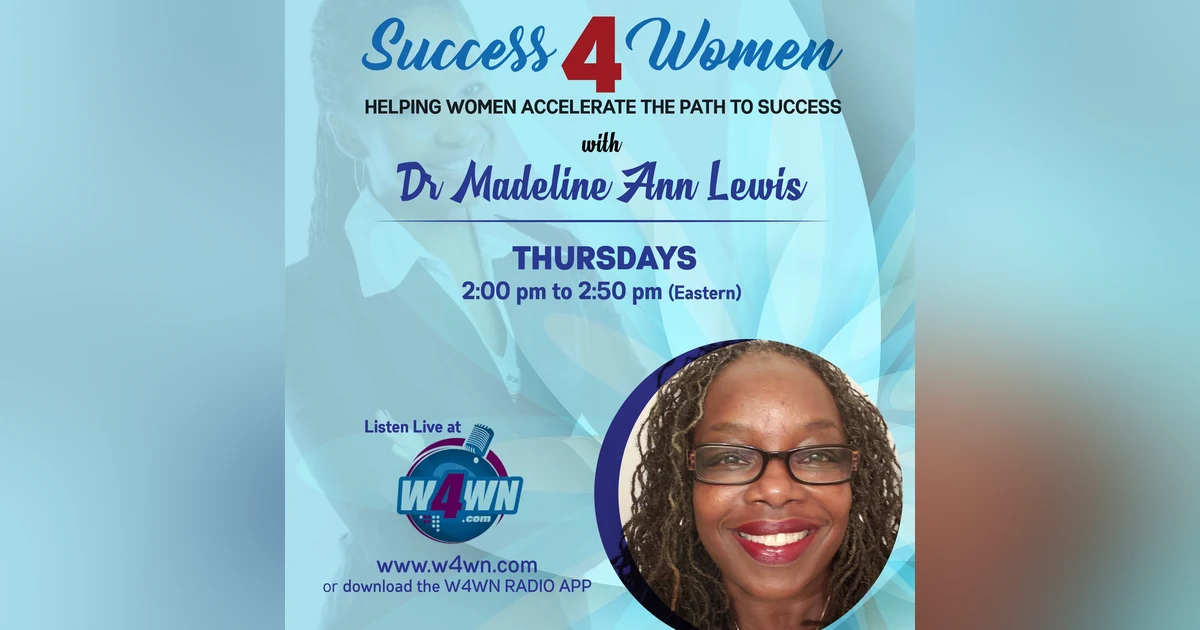
Success 4 Women is broadcast live Thursdays at 2PM ET on W4WN Radio - Women 4 Women Network (www.w4wn.com) part of Talk 4 Radio (www.talk4radio.com) on the Talk 4 Media Network (www.talk4media.com). Success 4 Women TV Show is viewed on Talk 4 TV (www.talk4tv.com).
Success 4 Women Podcast is also available on Talk 4 Media (www.talk4media.com), Talk 4 Podcasting (www.talk4podcasting.com), iHeartRadio, Amazon Music, Pandora, Spotify, Audible, and over 100 other podcast outlets.
Become a supporter of this podcast: https://www.spreaker.com/podcast/success-4-women--3126970/support.
0:00 The topics and opinions expressed on the following show are solely those of the hosts and their guests, and not those of W four WN Radio It's employees or affiliates. We make no recommendations or endorsements for radio show programs, services, or products mentioned on air or on our web. No liability, explicit or implied shall be extended to W four WN Radio It's employees or affiliates. Any questions or comment should be directed to those show hosts. Thank you for choosing W four WN Radios. Success successful. Such successful women?
0:57 Did you know women represent just three of Fortune five hundred CEOs and less than fifteen percent of corporate executives at top companies worldwide? Have you wondered what the secrets are to getting into the top ranks, whether in the private or public sector. Do you want to figure out how to stop being held back in your career? Are passed over for promotion, then you're in the right place. Hi. I'm doctor Matlanane lewis President and CEO of the Executive Women's Success Institute. I have decades of experience in the military, the federal government, and corporate America, and my mission is to help women succeed and tap into their full potential.
1:42 I want to reach a million plus women around the world to become the leaders they are meant to be. So if you want to move into a management or executive level position, or maybe you are a female veteran transitioning out of the military into business entrepreneurship, and then reach out to the Executive Women's Success Institute at three zero one six nine three three two eighty four let us get you on the fast track to success. Well, Hello, and welcome to the Success for Women Show, where you can view us on Talk for TV and listen to us on the Women for Women Network. I am doctor Madeline Ann lewis your host, and my mission is to help women accelerate the path to success. Well, today's topic is what we're hearing a whole lot about all over the place, and it's the AI evolution. And my guest is mister Jason Michael Perry. Now let me give you just a little background, mister Perry. Jason Michael Perry is the founder and Chief AI Officer at Perry Labs, where he helps organizations build smarter with artificial intelligence, turning complex
3:14 technology into practical, human centered solutions. With more than two decades of experience in leading engineering and product teams across startups, government, and Fortune fifty companies, Jason brings both technical depth and relatable ground level view of how AI is reshaping work, leadership, and everyday life. He's the author of The AI Evolution and the creator of Thoughts on Tech and Things, a newsletter and podcast produced with WYPR that explores the human side of emerging technology. Also led AI in a Minor an award winning collaboration with the Baltimore Symphony Orchestra and AWS that blended classical music with AI composed performances, showcasing how creativity and technology can work together rather than competing.
4:24 I'd like to welcome to the show, mister Jason, Michael Perry. Hello, thank you. Doctor Mallin. Hi, how are you. It's great to have you on here. You know, everybody's talking about AI. We're seeing so much about AI. Every time I open up my computer, my email is full of you need to get this. I guess there's something to do with AI. All these different components. It's so confusing. So we're hoping today that you're just gonna shed a little bit of light on some of this stuff that's going on, But before we get before we get started, I always give the standard bio on my guests, but I also like to just find out, why don't you just tell us a little bit about what you want us to know about Jason Michael Perry.
5:15 Well, I always say I'm Jason Michael Perry. I always say I go by the three first names. But the last three four years, I've just been immersed in everything that's happening in the space with artificial intelligence, and more importantly, how it's helping businesses and how it's impacting businesses, and also how it's changing our regular lives, our professional lives as well as our personal lives. I spent those years almost doing a walk about and talking with people, speaking at events, talking at conferences, attending meetups, and took a lot of this information as well as the consulting work I was doing, and brought all of this into this book, The AI Evolution, which is just really speaks to not any of the moment, but also talks about how big of a potential shift that this is for the world.
6:02 And just to quickly speak to that, one of the things I love to say in my talks is that the five biggest companies in the world right now by valuation, is there Nvidia, Apple, Amazon, Google, Microsoft. These companies didn't exist fifty one years ago. And I know that's that takes a second, so let's like let that set in. But fifty one years ago, none of these companies existed and a lot in Microsoft just made fifty years this year. And the thing that that all these companies have to do is the is the technology that has had such a big impact on who you are. So for example, uh, personal computers, that's Microsoft and Apple, that's the Internet. Then there's then there's the the modification and mobile apps, and now we're talking about AI and that's potentially a bigger shift than anything and that that's that's what this conversation is about. That's what's so important right now.
6:55 Wow, now your your book the AI Evolution? What ends aired you to even write that book? And what do you hope that your readers will take away from it? Because, like I said, it's a whole lot of stuff about AI. I found myself talking with professionals and business owners as well as managers and companies that were asking this question of how do they adapt their businesses to be AI native and to use AI in a way that will truly impact the organizations. And to be frank, there's a lot of companies who are just tossing the words AI out there and putting it on top of their brands or changing marketing, you know, collateral to just use words AI without really understanding it. There's also a big void in education because this is so new for executives of all types.
7:46 We're hearing these terms. Like agenta AI or AI workflows and they don't understand what it means. And that's that's not that's just the reality of how quickly these things are adapting. And so I wanted to write something that just set and start terms. What is the moment that we're dealing with wou'd say, true path to understanding the needs for governance, How do you deal with adoption? What are the issues that your workforce are dealing with, What are the data issues and the things that you need to do to make sure that you're setting up your systems that so they're set up in the right way to allow AI to actually work within your organization. And that was the goal of the book, The E Evolution. But I also wanted to talk about it in terms of a role, which may be a chief AI officer and maybe a director or a manager, but the person who wants to really take that hat and put it on and be that change agent within an organization to help implement AIM.
8:41 Well. You know, your book explores a lot about reshaping and how AI is reshaping these businesses and the way that they operate and make decisions. What do you think are some of the things that organizations are that's causing them to hold back even some of them maybe from even implementing AI in the organization? Change management is the are the big words here that there's a lot of fear and there's a lot of fear from employees who are worrying that the work that they're doing to adopt AI means that they're working themselves out of a job. So some of those cases leads to a lot of fear, a lot of concerns, and also a low AI adoption, which I see in a lot of organizations. That's a big thing, you know, to just pull on that thread a little bit a little bit more. I mentioned the top five companies by valuation.
9:35 Those are also some of the companies that are doing the most in terms of A implementations. And there are also some of the companies that are leading with the most layoffs, and we're having conversations about the way that their middle management layers are changing. And that's a big thing. The companies who were pushing to be AI native or incorporate these technologies and deep ways or saying things like more cross functional management, they're saying things like how do I reduce the amount of managers that we have and how do I scale our individual contributors. These are things that are going to impact you one way or another. It may take longer for it to hit your industry or your organization type, you know, and you may see it happen more with technology companies first. But understanding these things, understanding the change is part of it. Understanding and seeing the wave that's coming. Is that you figure out how you want your business to adapt or how do you define this thing is important. The other big thing I would say is that for companies who say we're blocking AI or we're not ready to say what we're doing, that that's the worst scenario to be in. And that leads to what we call in our industry and the tech industry chatter. I team, which is a simple way of saying that people are using the tools regardless of whether.
10:46 You say that they can or they can't. And if you're not providing the education, then you have a higher likelihood of these tools hallucinating, which is just a technical way of saying is going to lie to you. We see this with law firms and all over the place, where it's generating things that are not true. If you're not teaching your workforce understand this, you're you're increasing your risk profile, you're putting yourself in put in legal peril, and you're not doing the things that are necessary as an organization to make sure that your team is ready. And so this is a this is a really complicated thing of how do you get the adoption, how do you how do you do it change management to bring your teams along, How do you provide the education to make sure they're using the tools, How do you make sure that you're providing the tools, how do you roll out governance when you have a technology's changing every three to six months and all this is complicated. But if you're not making this a priority, then it's happening without you being in control of it, which is a worst scenario, and that means that these things are happening without anyone with your organization and the grasp, but the risk that is possibly there for your for your company exactly.
11:52 Yeah, I know that well a little bit. I'm going to make sure that I say that. That I know about AI is that a lot of the tools, even you know a lot of people use the check GVT. I mean, you can train it or teach it to pick up I guess your personality sort of speak, so that when you ask it to do something, it really will take on your tone or your voice or what have you. And I understand that, and I guess that's where maybe the fear comes in. You think with some people when they think about, Okay, if I implement this and it's in my business, the employees, like you said, will think that it's gonna take them out of a job, because I mean, isn't And this may be one of the lower level parts of AI. But even when you go into the supermarket and you have the checkout, the self checkout, isn't that a part somewhat of AI because it's doing it all by itself. You know, all you do is stand there and scan your stuff. And it takes your money, takes your card, what have you, and then you're out the door. And so they don't need an employee other than to stand there to make sure that you're scanning everything you know and not not doing what you're supposed to do. But like you said, and then you have the legal part of it. I know that.
13:21 For example, if you're someone who say, you decide you want to create websites for someone, then you also have to make sure that you I would think, uh, there's there's also going to be a part of it that you're going to have to make sure that the legal part or whatever however you set it up, especially if the person is going to be have it where you they take money, some kind of way collect money, there's also that. So then, like you said, it's a lot that you have to, you know, make sure that it has even though it changes, but it changes so quickly. I think that the part.
14:02 So I think that I have a unique perspective of this and not just me, but I think software engineers and technologists and futurists do. And that's that Over the twenty plus years that I've been at this, I've watched the software and the twos that I use become obsolete over and over and over again. The things that were standard five years ago, the books that I wrote ten years ago, those things are technologies that don't exist, and I've had to consistently recreate myself. That's not a thing that most industries are, most jobs that've had to deal with. There's incremental growth, but not growth at the speed that technology has been at, where every few years what you're working on just no longer makes sense, or there's a new version.
14:42 Now. I would say that automation is nothing new. It's been happening. But the way that I term this is that the thing that multiplies someone's ability, the thing that scales someone's ability to do whatever it is that you do, it makes you able to do something faster as someone else's automated. And you can look at that in any way you want. Maybe that means that now you can do the things that require you to go to a music studio to record, and you can do that now in your house and your room. And maybe that means instead of meeting ten people, you can do it all by yourself. That is scaling your potential, But at the same time it is automation that is also meaning that there are other roles that may not be there. When I have these conversations with businesses and with teams, and I say this in my book, everyone who I know has always said to me, I wish I could stop doing X so I could focus my attention on doing why.
15:36 And I don't care what it is. I don't know how many people I've talked to who said that we possibly have a two, not just automation, but something that is a subjective, capable two that can do things in a way to like a human that early on right now, that could maybe take X off of your plate. Is there enough why? And if here's another way to say that, what is it that you really do think that we have a problem just in terms of how we define our jobs. You might call me a coder. That's that's not what I do. I write code, but code is like the least important part of the thing that I do. You might call someone a writer, and I would argue some writers who will very much disagree with me, that maybe writing is not the most important thing that you do. Maybe it's the storytelling, maybe it's the interviews, maybe it's the it's your ability to connect characters in a way that no one else can and the words are important, but not as important. We see this already in jobs when when you look at the most tactical positions, in entry level positions, they are written in the most tactical way. You're a writer.
16:41 But then you think about the things that boils up to a creative director. What does that do well? That's conceptual in thought process? And so we have to start redefining where we are in this value chain. And if you find that the only value that you have is tactical, I don't care what it is, if you're if you're in retail, or where it is, you're going to find that those are jobs that are more susceptible to automation than those jobs that require you to use the human abilities that are a little bit more complicated. And I think for all of us we have to start asking that question, have you been spending on one X? And is there a lot of value and why that you can add to an organization have more impact than you realize. I'll add to this that some of the things I am the most interesting here are that the folks who are having the hardest time right now career wise, are entry level and fresh out of college kids.
17:32 These are the folks who are struggling the most. And one of the things that's amazing about AI is that because it accelerates the potential of a person, it can take a person and this is vibe coding, vibe marketing in these different words that you may hear, and it can accelerate their abilities. So one person can do the work of ten or twenty, you know, or you may hear even cases where a person can do the work of one hundred. I'm not saying all of those are going to be the numbers that you hit. But when that happens, the thing that becomes incredibly important is subject matter expertise and experience. And you're finding and I think what we're finding in the AI place is that experience. It's hard to get the creative director and an organization has that experience that allows an unlocked potential when you give them the ability to have a bunch of systems that can do the more tactile work. And that's the complicated place that we that we sit in. But if you have that subject matter expertise, you have right now the ability unlocked potential that you may not have ever been able to do with the power of AI.
18:33 So that brings me to the question of why is the role of the chief AI officer becoming so essential, especially for modern organizations. So at a large company of fortune fifty, one of the biggest problems and you know, I'll use it. I would just like say, in terms of football, who has the football right, who's the quarterback? And that is difficult in large businesses of fortune five hundred and bigger because they have possibly a chief Digital Officer, Chief Data Officer CIO, right, and all of these roles. Potentially in a CEO CFO. You can go through all these roles kind of are around this thing. And giving someone the clear authority to say that you're the person's responsible for figuring out how we implement AI when it touches all of those things is incredibly important and it's something that not most organizations are doing. It's really easy to look at the technical people, the CTO, the CIO and say that it's their responsibility.
19:32 But one of the biggest things I think we've talked about here in this conversation with rolling out AI is education, it's change management, and it's also the understanding of processes, your SOPs, your standard operating procedures, and looking at those processes to figure out how you can change those workflows to be AI enabled. It's supported by technical team members, but a lot of this work is not necessarily as technical, and it's doing that with data, it's doing that with the support of the systems that back in and so I'm not saying that this is not your technical folks. What I'm saying is that is important to take a step back and understand all of the things that are being impacted across the organization and understand that this is a cross functional thing that requires you to give someone the power to work across the organization, where you may have someone who's in charge of your data, someone's in charge it, someone's in charge of your operations and your processes that can work across those team members to help implement these things while also understanding the soft skills change management.
20:33 How do you bring your team around the difference between an adoption of ten to twenty percent versus an adoption of sixty to eighty percent and using AIOS is millions, millions of dollars, and just that thing of making sure you have someone who can help bring a loan and pull your team to use these tools and do it in the way that it's impactful. Can be huge in terms of the ro potential for a company in a business. Yeah, it's yeah, that definitely definitely an area to get into. But for the companies that aren't ready for a chief AI officer, what practical steps can the leaders take to start preparing now?
21:18 I think one of the first things that you can do is you can start to make sure that you're documenting your standard operating procedures, that you understand the way that your processes work, whatever they are, no matter how small or no matter how small you are. This is a thing that will just give you immense value to put on paper and say this is how my processes work. But that also gives you the opportunity to start looking at places where you can automate or at AI to those processes in the long term. Another thing is to start to take a look at your data and wrinle it. I'll try not to get to overly technical here, but one of the things that's happened in the world where a lot of small businesses and medium businesses rely on on SaaS platforms is that they have an approach that's called best to breed, which means that you probably have a system that's your CRM, you have a system for your accounting, you have a system for you know this and this and that, as opposed to more old school traditional things, whereas a big old e er P or enterprise resource platform, they did a lot of everything. And some of the bigger issues that I'm starting to see with our aimplutations for small and mid sized businesses is that it's just hard to get these things to talk together.
22:30 We have three, four or five different platforms, and just knowing that all your customer records are here, but all of your product of information is here, and you want the ability to personalize things, well, AI can do that, but first we have to deal with these first issues of understanding how we make these data pieces connect, so getting a wrangle on what your data looks like. The last thing I'll say is on that data wrangling side, is that one of the best things about artificial intelligence is that it understands nonstructured data. And just a quick lesson structured data is a thing like an Excel spreadsheet or a database. It's like really structured and you can look at it and understand it. Unstructured data is that there's all those word documents that you have on your Google Drive or your one drive or whatever it is that don't necessarily might tab information, but you have to read it to understand it. AI is amazing and that it can take that unstructured stuff like an image or a document and it can understand what it is, and that unlocks so much potential because if you haven't done a lot with CHATGPT, one of the best things you can do is drop a word documented or a PowerPoint presentation or a pdfile and ask a question to summarize.
23:42 That's unstructured data that it can analyze understand. Yes, but if you are an organization that has nineteen thousand versions of the exact same document, all of them that are slightly different, how do you start to take these pieces of data and use the train? What if you give it something that's not right? Well, that's true issue. Right now, this thing has information that's kind of weighsing this knowledge and they can't use it. So so the two places I say that you start off with or or understand where your data is start to put together policies to make sure you're keeping your data as clean as you possibly can, and make sure you understand your processes. And if you can do those three things. As this technology starts to evolve, it becomes a lot easier to wrap these technologies around the things that are possible use a AIM.
24:30 So would that those three things would that be considered some of the biggest mistakes that organizations make when adapting AI, or is it other things that they you know. One of the biggest things is that that AI needs AI loves is data. Information and context. If you think of a you know, taking a college kid and running them through the Deloitte Way or the Essential Way, or any of these large organization's education programs, is to make sure they understand how you do things. This is the exact thing that we are all wanting to do with our AI models. We want to take these AI models and we want to take something that has lots of general information and knowledge. It knows how the world works, it knows about business, but it doesn't know about your business. It doesn't know what makes you unique.
25:20 It doesn't know about your individual writing abilities, or your things. And this is personal or this is on the business side, And so When you can provide that context to an instance of CHATCHBT or claud or whatever model, then you can start to unlock abilities. That makes it amazing. There's a new feature, a relatively new feature that I'm a big fan of, called connectors that you can do now with chatchbt as well as Claude, and this allows you to connect it to external data sources like your Google Drive or a HubSpot and instead of saying, hey, how do I deal with X issues with the customer, you can ask it a question that allows it to go and pull all of the customer activity information from HubSpot and you can start to have a conversation like can you imagine being able to sit which attribute you talking or writing it in the chatbot and start to have conversations with your data sets that if all those BI reports that you know, business intelligence reports and documents that you've gotten all these years and you're like, what does this mean?
26:24 And you sit down with someone you're like, can you expl what this means? Now? We have this tool that can take that information in and you can have conversations with those data sets right now. And these are the places that become amazing and start to unlock potentials. This is that scale. If you're a business owner and you suddenly have the ability to have conversations with your finance data, that's that's an experience that once you do it that first time, you're like, Wow, where was this? Where was this before? Wow? It's a lot. It a lot, that's for sure. So and based on that, how do you decide which new technologies are worth paying attention to and which one are just noise?
27:08 You know, I'm gonna just shamelessly, you know, do a plug here that this is. This is the reason that I write the regular newsletter. This is the reason uh that that I that I do my podcast and talk about thoughts on tech and things that I talk about this. Uh, it's it's the question that when I did that walk about and I started talking with businesses, you know, it's it's I'm a I'm an entrepreneur, I'm a business owner. It's more than a full time business to run a business, and it's very hard to stay up to date. And for my clients and and for the folks who read our newsletter, what I try to do is to to keep you up to date with the things that I think are important or interesting that you should you know, try Uh that's not to say that everything is uh that that you should jump on everything you know tomorrow.
27:49 This tech is evolving very quickly, but it's it's it's important to keep up to date with the possibilities of what you can do and to understand some of the terminology when it comes out. Now and now, I'm going to just ask you like a personal question on my behalf because I'm doing the AI certification, so I'm trying to get so I can understand, like you say, this AI technology because it is not going away, and I know that in my business also, I have to use it, so I need to be able to understand it. Now. I know I don't have to be, you know, an expert like you, but I do want to be able to understand it. So what would you say going through something like that AI training like that a certification, what do you think is the And I'm not even sure how to ask this question? Maybe what is the best thing to focus on that would help someone like me who don't have ten years of experience with technology like that to be able to go through this aissation and kind of get enough to be able to understand it.
29:04 And I know that open AI and some of these companies are developing, you know, workshops and certification programs. I also know that there are a ton of organizations that are offering them. I think that's always a great place to start. I also offer workshops, and I think just just committing to educating yourself is always a good thing. The other thing is to start using it and then and it doesn't You don't have to do it in a way that feels perfect like. And I think that's the thing that sometimes can feel like a blocker for so many of us, is that you find yourself sitting in front of this thing that's just a white screen with the textbox, and it's like, what am I supposed to do? And you kind of need like that that how do I start? And once you start, I think it unlocks things.
29:50 Now. So I usually recommend I like to cook, and so I like to recommend using chatchbt Claude, whatever I'm out of that you're using to help you do meal planning. And one of the things that I love about this is you can just on your phone with chaccu, put go into your kitchen and just take pictures of the contents of your fridge and your pantry and send it to it and say like, what kind of ideas do you see that I can cook based on the things that are in here? And that unlocks that possibility of like images that are unstructured data. And you know what, last time it was like there's some fish way back there. I didn't even know that stuff was back there, and it saw it and it was like, hey, you. Know what you can do with this? And I was like, you know what, that that was helpful.
30:31 But little things like that and doing things like that that can help you in your personal life or you know, in your business life start to like unlock things because then you start wondering, man, what if I take a picture of this of the of a you know, the bike I'm trying to fix, so this thing and I ask it questions and maybe I get answers, and it gives you that want to experiment and try and that opens up so many different doors and opportunities. That's the thing that I say to everyone's just start doing it. And and the great thing about having conversations with the with the robot, with the chatbot is that you know, no one's gonna no one's gonna point or laugh at you or say anything you can you can, you know, start small, just do little things, but start using it.
31:13 And the more you use it, then the more you're gonna start wondering what if it could do this? And that's some of that it might not be able to do, you know yet. But I always remind people this is the worst version of AI you're ever going to use. And you know, there were a lot of things that can do two years ago that it can do now, and it's just getting better and better. Yeah. Absolutely, Like I said, it's just it's so much out there that you really have to at least familiarize yourself with it so that you can, you know, know what's coming at you at least you know. Yeah. So now you you mentioned earlier about you talked about vibe teams. What are they and how can they help organizations, uh, stay innovative and connected?
31:59 So I like to start with this idea of vibe marketing or the vibe coding. So vibe marketing is a is a good place to start. If you're a small business owner. Let's say you wanted to do an ad campaign. Well, you possibly have a designer that you need to bring on to generate images. You may you know, wonder if you're doing a TV commercial, maybe you need voiceovers, you need music, you need video content, and bit by bit you're like, you're either looking at hiring an agency or you're hiring lots of freelancers and you're bringing all this stuff together, and you're packaging these things together, and the cost is, you know, it's sometimes pretty expensive for a small business. That's the part that changes. With Vibe marketing or Vibe coding, you can pretty much put Vibe in front of anything. You can start to do these things by combining yourself with AI tools, and you know, you can think of it as like Iron Man. You start putting these AI tools around you and that becomes your team that allows you to do things in a way that you could do before. So those examples I gave you, there's a product called eleven Labs. With eleven Labs, you can generate voiceovers that sound conversational, you can generate podcasts, you can generate audiobooks, and now only that, you can use voices that they've licensed. You know, Burt Reynolds, for example, is a voice that you could use and you can have Burt rendols, you know, doing the narration for for your for your next commercial, or for your podcast if
33:30 you want, you know, for the intro. If you're talking about image generation, there's this this product from Google called Gemini, but the nano bananas the is the thing that everyone's talking about. It's one of many many different image generation twos, including the functionality that's built directly in a chat ept and you can generate images with great text and and all the things before people who complain about the fingers now it's it's it's hard to tell that these things are I generated. If you talk about video, there is a product called Google Flow, but there's also now Sora, which the Sora app is amazing from For my birthday, I generated a video of of me being one of the folks dressed as shirts versus blouses like you know the Prince Dave Schappewe skitt you know, playing basketball. And you can generate these things just with an idea and they look amazing, and you scan your face it generates video of yourself. And the tools to do these types of things are getting better and better. And then the the other that I always love to talk about. One of my favorite apps is is sun No son No dot ai or Suno dot com I think now these days.
34:38 But it's a music generation too. And when I tell you it generates music, I mean, this is music that's so good. Sometimes it's hard to tell that this is that. Like, believe that this is AI generated and you can give it a prompt. I heard a songer, but I'm never I've not heard as soon. Oh you as s u n oh, Suno dot ai or Suno dot com. You go, you give it a prompt and you can tell it the style, and before you know it, you can have something that sounds like, you know, Michael Jackson singing a song about you know, successful women, and it's amazing and it's it's it's it's it's an incredible tool. But you take all these things together and you start to package this stuff and suddenly you have the ability to bring all these pieces together with short video vignettes and music and voiceovers and images, and you could start to create things without needing to buy stock art or needing a photographer. And so so I can understand why some people might feel a little weird and controversy about it, you know, in some ways, because it's taking out things that that you might have used freelancers or others to do. But for someone who is a small business owner who's possibly not had access to resources, suddenly you're empowered to generate things and create things and the way that you couldn't you couldn't do before.
35:58 Absolutely so the. Idea of vibe teams is this idea of taking an individual and empowering them by giving them access to a series of AI tools that can accelerate and scale their abilities, by giving them tools that allows them to do things without with potentially having smaller human teams, but also bunches of age agentic resources that can help to provide them with the things they need to do to do different tasks. Wow, now this brings me to the females. How can women and underrepresented voices lead and shape the next wave of AI innovation.
36:42 I think that it's important to lean in. I think that's the best thing to do that. I love to start with the statement about five companies the biggest valuation not existing fifty one years ago, because I also. Love to say and maybe how everyone will get this. You know it's for a certain age rate, but but I love to say that we are in the AOL days of AI. Just to put in perspective how early we are in this, in this in this wave, and which I think so important about that is AOL, for anyone who was around at the time, was a hugely important company to the way that the Internet developed its success. You know, many people know we got you got mail and these things that are embedded and and pop culture in our lives.
37:27 That company doesn't exist today. That company's not here today, you know, and you look at someone like Google or Amazon, The words e commerce are relatively young. Those terms they're they're they're barely new. If you think about terms like social media, social media manager, those terms are relatively new, Those jobs are new. And we're at this cusp right now AOL days of AI where we haven't defined the words, we haven't created the vocabulary, we haven't created the businesses. We don't know if it's going to be open AI. Open AI might be the next AOL and maybe a hugely important company, but there may be something else, you know. The the I think Amazon and Google were both founded in like late nineties, one of them might be like early two thousand. Just to put in perspective of like how long it was in the wave from you know, where the Internet started to where these companies started. So so what I say to to everyone who's looking at this moment is that this is a this is a once in a lifetime opportunity to lean in on a technology in its infancy that's very early on, when there's so much possibility, there's terms that have created that you can that you can create the absolute fabric for what this thing is and the same way that Jeff Bezos did or Steve Jobs did when they created.
38:46 Something that we didn't know. And if you take advantage of the opportunity, they're the next fifty years. They're companies that hopefully are companies that are founded by people like us, that we can build today, that can have an outsized and packed in the world that that will exist because of that. Wow. Now, you we mentioned earlier that you're the author of The AI Evolution. Tell us about that, and how can the viewers get a copy of your book. Well, it's on Amazon, it's on Barnes and Noble. You can also check out my personal website it's Jason M. Perry Jasonmperry dot com and you can get to my newsletter.
39:30 The podcast as well as links to the book from there. And again, I think it's a I mean, of course I wrote it, so I have to say it's a great bread. My mom loves it too, so, but I think it's a great place to start wherever you are in your journey on AI, to to get at an idea of what's possible for your business. Okay, I'm gonna put your website in there so we can have that on the screen too. Wow. So anything coming up, any new books coming out? Are h want to maybe you know, let us in on. You know right now, I'm I'm very excited about the podcast. It's fairly new. Uh. The there's a lot of things that are happening in the AI space in terms of technology that that we're very excited about. Agentic AI is probably the thing that is the big buzz right now. How do you create workfloads of these AI bots that do things without necessarily needing a human in the loop, you know, so that they can complete tasks with you just saying it. And this is uh, this is becoming to the point where it can do that, but it's still very early on.
40:38 So what we're what me and my team are enjoying. Is this helping unlock the potential and possibilities for lots of businesses to show them just how how much is possible? And it's exciting. It's it's amazing times right now. Yes, it is so. Tell us if the viewers out there wanted to get in touch with you, you did mention that you do AI training, maybe they want to get some you know, information on that. How can they reach out to you? My website is always the best place to start. Www dot Jasoniperry dot com. There's a contact form there. There's also Perry Labs dot io www dot Perry Labs dot io, which is our consulting business. You can find a link there from Jasonmperry dot com as well, and you'll find access to our workshops, contact forms to get in touch with me, and I'm always happy to talk with anyone.
41:32 You can also find me on LinkedIn, Instagram, TikTok, and all of your favorite social media platforms. I'm usually Jason and Perry just like my website. Oh wow, good to have you. Thank you so much for coming and sharing those nuggets with us. It has been a pleasure. As I said, with AI out there, I know a lot of people are confused and trying to figure it out, so we do appreciate you coming in at least giving us a little bit of your knowledge so that we can try to figure this thing out and make sure that, like you said, implement it because it's not it's really not going away, so we definitely have to find out more about it. So thank you so much for joining me today. I really appreciate you.
42:17 It was my pleasure, Doctor Medlin, I appreciate. It, alrighty, you take care, thank you. Wow. So Nick, I just want to tell everybody a little bit of what's going to be going on, just another edition of upcoming events around town with me. I'm honored to share that I was selected as one of the She Rises Studios three hundred and sixty five features for November. So you'll be able to see that the link I had placed the link on LinkedIn. If anyone follows me on LinkedIn Facebook, you'll be able to read what they published about me. And of course, the she Rises Studios is founded by Hannah Olivis and Adriana Luna and it is it's a platform that where you can share your stories where they elevate they brands and inspire others, and they have a strong presence in Los Angeles and Las Vegas, and their mission continues to uplift and unite women around the world. So I'm always glad to connect with organizations that do that. It was a privilege to be featured alongside a lot of those phenomenal women that they also spotlighted in that. And I am still excited about the Successful Women Radio Show making the list of the top one hundred best Career, Mindset and Working Women podcasts, and that we are proudly sitting at number sixteen on the list,
43:51 which I think is not bad if I say so myself. This list highlights podcasts that empower women to build successful career, navigate workplace challenges, and find truth fulfillment in work and life. And so again I'm honored to be among those that placed on the list. Make sure to check out my book show Up to Rise Up Explore the Transformative Power of a Positive Mindset, which achieved bestseller status on Amazon in the Women and Business category, and it's available for purchase on Amazon. As I said, so, if you go to Amazon, put in my name in the search box, Doctor Madeleine and Lewis. The book will come right up. Also, do not forget to if you have not viewed my TEDx talk that I did in Vancouver, Canada. Yes it was in twenty twenty one, but make sure to do so because the topic is show up to Rise Up.
44:50 You can watch it on YouTube again. Just put my name in the search box doctor Madeline and Lewis and it'll come up or you. If you want the direct link, you can email me at info at exwsi dot com and I'll send you the link. Check it out. Continue For those that have been supporting me and sharing it and support liking and commenting, please keep doing so. Right now, it's at two hundred twenty six seven hundred and fifty eight views. Of course, you know we're trying to reach that one million marks, so keep pushing it out there. I really do appreciate you. And finally, I'm also a contributing writer to own It magazine, where I share nuggets and resources every month. On It magazine is a resource for personal and professional development and also business development, so make sure if you want to get a free subscription, you can let me know and you can contact me again at info at EXWSI dot com and just put subscription for on It magazine in the subject line and I'll get back to you again. I would like to thank my guests, mister Jason Michael Perry, and my viewers and listeners for joining me today. This is the success for Women's show. I'm doctor Madeline and Lewis and if you'd like to reach out to me, you can email
46:20 me at info at EXWSI dot com or go to my website which is www dot exwsi dot com. And while you're there, make sure to download my free three part video series on three things every woman should do to position herself for executive leadership. Also, make sure to sign up for my online course, which is Cracked the Career Code. To do that, you could go to www dot Crack the Careercode dot com. Don't forget to subscribe to our channel. Make sure you like this episode and also shared this episode with others. We had some great nuggets today from Jason Michael Perry, so if you're not familiar with AI you're still trying to learn AI h some of what he talked about will definitely help you. Again, this is a success for Women's Show. We're here every week.
47:21 I am your host, doctor Madeline and Lewis helping women accelerate the path to success. Thank you again for joining us. I love you all to life and as always, be well and stay safe out there. I'm still look successful women M


